Mount Shasta Area | Lassen Area | Trinity Alps | Shasta-Trinity NF | Klamath NF | Redwood Coast | Wine Country | Bay Area | Sierra Nevada | Hiking Advice
Sony RX100 hiking and backpacking camera: lightweight, high quality, fits in shirt pocket. (Courtesy Wikimedia)
I want a new camera for hiking and backpacking, a small and lightweight camera with high resolution that offers me many options, one that I’ll actually take on the trail.
My Current Camera is Too Heavy and Bulky for Hiking
Why? I have a 10 MP Sony DSLR A100 with a 28-300 zoom lens, but it’s heavy and bulky and I frequently don’t want to lug it with me.
Furthermore, it’s always in my pack, so when I want to take a picture, I have to through a whole production of taking of my pack, pulling out the camera, using the camera, and then reversing the process.
2018 My Current Hiking Camera is a Sony RX100
A couple of years ago, after a lot of research, I bit the bullet and got the best pocket camera around: the Sony RX100, specifically the Sony RX100iii model. I’m very happy with the picture quality, and I’ve used it to take most of the photos for my two most recent hiking guidebooks (Day Hiking: Mount Shasta, Lassen & Trinity Alps, and 100 Classic Hikes: Northern California), including the covers you see in the sidebar to the right.
Continuing with the older post…
What I Want in a Hiking Camera
Specifically, I need:
high resolution, 20 MP or greater
many settings for different photographic situations
good zoom capability, from wide angle to moderate telephoto
light weight
high quality
The Camera to Beat
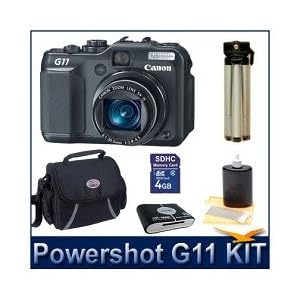
Canon PowerShot G11 10MP Digital Camera
Mark Stensaas, owner of Shasta View Gifts in Weed and a well-known outdoors photographer, recommended the Canon PowerShot G11 10 MP camera to me as the best compromise between portability and the ability to take high-quality pictures with a lot of flexibility.
Improved Smart AUTO intelligently selects from 22 predefined shooting situations
RAW + JPEG shooting and recording modes; capture images to SD/SDHC memory cards (not included)
4 GB Secure Digital HC Memory Card
Hi-Speed SD USB 2.0 Card Reader
Compact Deluxe Gadget Bag for Photo/Video
Three Piece Lens Cleaning Kit and Mini Tripod
Plus it only weighs 12.5 ounces, less than a pound.
It’s a Bit Pricy
It costs $489. I can pay that price if it’s truly worth it and serves my needs, but I’d rather spend less, as long as I get a high-quality camera that does everything I want.
I was on a similar search about six months ago and ended up with a Panasonic DMC-LX3, my first departure from Nikon. I’m very pleased with this camera, mostly due to the incredible sensor (holy dynamic range batman). The wide shot capability is also a big plus because of all the backpacking I do in the sierra where I don’t want to carry my Nikon D90 and corresponding lens(es). I don’t want to miss those big expansive views!
I wrote up an initial impressions post about it after my first outing – maybe I should get around to a followup post now.
Rebecca gives a strong thumbs up for the Panasonic DMC-LX3. Go to her excellent hiking blog via her link above to see what she thinks, and to see the beautiful photos she took.
And then check her other excellent posts and subscribe to her blog.
I carry a G11 and love it. The photos are excellent and it has every function you will need. Battery life is great. The size can be a bit of a problem but it fits perfectly into my hip pocket on my osprey kestrel 48. I put a tripod mount on the bottom and clip a mini beaner on that to clip to my day pack on the lashing points. But I guess that would work with any camera. On the following link any of the hiking photos have been done with the G11. A few were done with a DSLR but mostly my G11.
I also have a G11 and love it. The only drawback is missing some wildlife shots, but being able to hike with a much smaller camera (shaved pounds!) and a smaller camera bag (The Mountainsmith Cyber II Large Recycled is perfect!) has been great. I even got a second Cyber II for my Flip Video and iPhone.
All of my photos since December have been from the G11.
I have done a lot of backpacking & climbing and taken a lot of cameras weird places. First of all, as soon as you drop to a compact or sub-compact camera you are going to stick yourself with a smaller sensor, so your low-light noise is going to go up. For backpacking though a lot of shots are in great light so this is not as big an issue. Of course, this all depends on what and how you are shooting. I HIGHLY recommend the Panasonic ZS series. I have the ZS1 and just bought the upgraded Zs7. These cameras have Leica lenses, weigh about 30% less than that Canon and have a WIDER angle lens (25-300mm in 35mm equiv). They have excellent lens characteristics throughout the range. The newer Zs7 also has a built-in GPS (can eat batteries faster) to geotag your photos. Also note that you will need a Panasonic brand spare battery, won’t take generics. I have often gone into the backcountry with 2 fully charged batteries and easily taken 300+ photos without battery problems. I have owned about 5 Panasonic Lumix cameras for my pocket/travel camera and they are hard to beat. Oh yeah, about $200 cheaper than that Canon too! Do you really need an external hotshoe in the back country? I agree, that Canon feels nice, built well and is a super sexy camera, but for the money and end flexibility, choose the Panasonic. Check out dpreview.com, they have the most comprehensive reviews of both cameras. (If they don’t have a full review of the Zs7 up yet, just pick one of the other ZS series as they are all the same, the Zs7 just has fancier electronics). I should mentioned the new electronics on the Zs7 double the hand shake stabilization though and much faster focus and power up time! Good luck! Email me for any questions!!
The Canon is a beautiful camera. I think in the end it just comes down to what feels best in your hand and what you will pull out and use. The big benefit for that camera is the low pixel density on the chip and the ability to save raw images.
When I travelled with 4×5 cameras, nice SLR’s and my little Leica M6 I noticed that with a lot of my travelling though that I ended up keeping more pictures from the Leica than anything. I think that was just because it was smaller, I carried it more often, was more likely to pull it out to shoot a scene and just loved the way it felt in my hand. The Panasonic Lumix is really the best compromise in all avenues I think. I really use wide angle and if Canon could make that lens a 24-200 I think I would seriously consider returning to that slightly larger, heavier camera. 🙂
I just found your blog and just moved to Northern California, so I look forward to reading more!
Just FYI: I just received my new upgrade to the ZS1, the Lumix ZS7. Had a few notes to add to my previous post. First, the newer ZS7 is lighter and has slightly better design to control placement, a better LCD and much faster CPU. Although my previous post said it would not take aftermarket batteries, mine works fine with my aftermarket battery. As far as images, I did a quick comparison and both extremes (at 25mm and 300mm) between my ZS1 and my ZS7. Although the pixel density is higher in the ZS7 I did not see the increased noise I was worried about. Actually, the new CPU and hardware not only speed everything up, but the image processing is much better even with that bigger, denser chip! Seemingly improved contrast range, JPG compression and less noise overall with nice resolution. These chips are still not the best in really low light compared to larger chips, but I was happy. With the ZS7 you get a GPS, a lighter body, better anti-shake, faster focus (very fast) and a better images compared to the ZS1.
I am heading out Thursday night to find a decent hike to try it out. Now to find some mountains without slushy snow (I am looking at your book now!!) Let me know if you want any more info on the ZS7 and I will quit hammering your blog with this stuff. -noel
I think you should stay with the Sony A100 and use a wide zoom lens as your primary lens (18mm – 70mm). I’m assuming the A100 has a larger sensor than a point-and-shoot (Canon Powershot G11). The bigger sensor make a huge difference shooting in low-light. I carry a Canon Rebel Xti with a 18mm-50mm lens. I don’t find it too heavy for hiking.
I thought I should check in and mention that I sold my ZS7 and bought a Nikon DSLR. Although the small Lumix produced some superior images in good light (i.e. hiking, landscapes, etc…) it really underperformed in low light situations which is important to me. I also wanted the better control of depth of field that you get with a larger sensor. So, I still recommend the ZS7 for general backpacking photos (wide lens, great zoom, great sensor, small, GPS, etc…) I could not sacrifice the low light (evening, inside the house, fireplace, etc…) shooting I do as well as portrait stuff.
Noel, thanks for sharing why you switched to a DSLR. I’ll write soon about the decision I made. As it stands, I use both my new small camera and my Sony DSLR.
Just curious if you ended up making a decision? I’m a camera novice currently looking for a new camera with backpacking specifically in mind (lightweight, wide angle, decent battery life, etc). Looking forward to three weeks in the Sierras, I’m psyched! Any updates/thoughts would be greatly appreciated.
Dear group;
I am also wondering what the ultimate decision was as well and because this original post came out almost a year ago if anyone had any updates on newly released cameras and innovations?
From the original post many of the requirements are now ieven in lower end cameras? Because I am primarily looking for a camera for the outdoors, hiking, skiing, wildlife in the northeast besides the requirements here I am wondering if anyone has any experience with some of the new higher end point & shoots like the Panasonic Lumix z10 with X16 zoom lens or the new Nikon P500 with 36X Zoom Lens?
Right now I am pretty much stuck on getting a Panasonics Lumix camera because of the Leica lens but very open to folks that actually take and use their camera outdoors!
I ran a wedding business for over 30 years and had many wedding photographer friends that used Leica cameras forever. When my kids asked for cameras a few years ago I did some research and went with Nikon point shoot cameras for them. As they became older teenagers and their cameras broke, we went out and purchased Panasonic Lumix with Leica lens. My opinion is that the Leica lens makes a huge difference in picture quality with everything else about the cameras pretty much being equal.
I like some of the earlier recommendations. The LX3 shares a similar feature to the Powershot GX11 – A CCD rather than CMOS sensor. This is what gets you the excellent low-light performance in this compact category. The Canon S95 does the same thing – one of the few cameras left that combines a CCD sensor with a low F lens system. I would think for Winter backpacking where light is always low – these are ideal, perfect cameras.
I think the reqts for backpacking are: light and small enough to attach to your pack or yourself to allow for easy reach. As wide angle as possible for landscapes. image stabilization. Durable enough so the sweat off your fingers doesnt destroy the controls.
Despite the lovely, small CCD cameras ; I was wondering if anyone has taken a Micro Four Thirds camera out for shooting. I’d like to hear anyone using a 17 or 20mm pancake wideangle lens. The real attractor to me is the Olympus 9mm-14mm f4.0 lens for shots far above the treeline!
Like just about every other website on the planet, NCHT uses cookies. Continuing to use the site means you're OK with that.Cookie settingsACCEPT
Privacy & Cookies Policy
Privacy Overview
This website uses cookies to improve your experience while you navigate through the website. Out of these cookies, the cookies that are categorized as necessary are stored on your browser as they are essential for the working of basic functionalities of the website. We also use third-party cookies that help us analyze and understand how you use this website. These cookies will be stored in your browser only with your consent. You also have the option to opt-out of these cookies. But opting out of some of these cookies may have an effect on your browsing experience.
Necessary cookies are absolutely essential for the website to function properly. This category only includes cookies that ensures basic functionalities and security features of the website. These cookies do not store any personal information.
Any cookies that may not be particularly necessary for the website to function and is used specifically to collect user personal data via analytics, ads, other embedded contents are termed as non-necessary cookies. It is mandatory to procure user consent prior to running these cookies on your website.




%22%20transform%3D%22translate(.6%20.6)%20scale(1.17188)%22%20fill-opacity%3D%22.5%22%3E%3Cellipse%20fill%3D%22%23316256%22%20cx%3D%22235%22%20cy%3D%2248%22%20rx%3D%2256%22%20ry%3D%2268%22%2F%3E%3Cellipse%20fill%3D%22%23e1dee4%22%20rx%3D%221%22%20ry%3D%221%22%20transform%3D%22matrix(134.62378%2069.95549%20-12.91898%2024.86156%20200.9%20146)%22%2F%3E%3Cellipse%20fill%3D%22%23805d23%22%20rx%3D%221%22%20ry%3D%221%22%20transform%3D%22rotate(-6.1%201021.4%20-51.4)%20scale(31.10221%2093.66742)%22%2F%3E%3Cellipse%20fill%3D%22%23dedbe1%22%20cx%3D%22104%22%20cy%3D%225%22%20rx%3D%2272%22%20ry%3D%2223%22%2F%3E%3C%2Fg%3E%3C%2Fsvg%3E "Give the Gift of Hiking and Camping Books This Year!")


%27%20fill-opacity%3D%27.5%27%3E%3Cellipse%20fill%3D%22%23f9f4ff%22%20fill-opacity%3D%22.5%22%20rx%3D%221%22%20ry%3D%221%22%20transform%3D%22matrix(91.31382%2066.02258%20-35.05562%2048.48435%2046.5%20157.6)%22%2F%3E%3Cpath%20fill%3D%22%23b8c768%22%20fill-opacity%3D%22.5%22%20d%3D%22M238.3%20231.9L140-24.1l129.1-49.6%2098.3%20256z%22%2F%3E%3Cellipse%20fill%3D%22%23b4aece%22%20fill-opacity%3D%22.5%22%20rx%3D%221%22%20ry%3D%221%22%20transform%3D%22rotate(-113.2%20136.3%2016.5)%20scale(262.7941%2029.81633)%22%2F%3E%3Cellipse%20fill%3D%22%23d3e187%22%20fill-opacity%3D%22.5%22%20rx%3D%221%22%20ry%3D%221%22%20transform%3D%22rotate(49%20-28.4%2084)%20scale(111.55642%2038.65434)%22%2F%3E%3C%2Fg%3E%3C%2Fsvg%3E "Burney Falls January 2025 Hiking Trails Closure Details")




I was on a similar search about six months ago and ended up with a Panasonic DMC-LX3, my first departure from Nikon. I’m very pleased with this camera, mostly due to the incredible sensor (holy dynamic range batman). The wide shot capability is also a big plus because of all the backpacking I do in the sierra where I don’t want to carry my Nikon D90 and corresponding lens(es). I don’t want to miss those big expansive views!
I wrote up an initial impressions post about it after my first outing – maybe I should get around to a followup post now.
http://calipidder.com/wp/2009/11/panasonic-lumix-dmc-lx3-digital-camera-first-impressions/
Rebecca gives a strong thumbs up for the Panasonic DMC-LX3. Go to her excellent hiking blog via her link above to see what she thinks, and to see the beautiful photos she took.
And then check her other excellent posts and subscribe to her blog.
I carry a G11 and love it. The photos are excellent and it has every function you will need. Battery life is great. The size can be a bit of a problem but it fits perfectly into my hip pocket on my osprey kestrel 48. I put a tripod mount on the bottom and clip a mini beaner on that to clip to my day pack on the lashing points. But I guess that would work with any camera. On the following link any of the hiking photos have been done with the G11. A few were done with a DSLR but mostly my G11.
Good luck.
Jesse, thanks for your opinion. You’ve got some cool and crisp shots on Picasaweb.
Another vote for the G11!
I also have a G11 and love it. The only drawback is missing some wildlife shots, but being able to hike with a much smaller camera (shaved pounds!) and a smaller camera bag (The Mountainsmith Cyber II Large Recycled is perfect!) has been great. I even got a second Cyber II for my Flip Video and iPhone.
All of my photos since December have been from the G11.
Derek, I’m glad you dig the G11. I’m also concerned about the limited telephoto ability.
I really like your site and good luck with your book. Let me know when it’s out.
Oh yea, and the ability to still shoot RAW pics has been essential. As stated above, the battery also lasts forever. And the camera feels rock solid.
Thanks again Derek.
Just followed you on Twitter. I’m @TheJohnSoares.
I have done a lot of backpacking & climbing and taken a lot of cameras weird places. First of all, as soon as you drop to a compact or sub-compact camera you are going to stick yourself with a smaller sensor, so your low-light noise is going to go up. For backpacking though a lot of shots are in great light so this is not as big an issue. Of course, this all depends on what and how you are shooting. I HIGHLY recommend the Panasonic ZS series. I have the ZS1 and just bought the upgraded Zs7. These cameras have Leica lenses, weigh about 30% less than that Canon and have a WIDER angle lens (25-300mm in 35mm equiv). They have excellent lens characteristics throughout the range. The newer Zs7 also has a built-in GPS (can eat batteries faster) to geotag your photos. Also note that you will need a Panasonic brand spare battery, won’t take generics. I have often gone into the backcountry with 2 fully charged batteries and easily taken 300+ photos without battery problems. I have owned about 5 Panasonic Lumix cameras for my pocket/travel camera and they are hard to beat. Oh yeah, about $200 cheaper than that Canon too! Do you really need an external hotshoe in the back country? I agree, that Canon feels nice, built well and is a super sexy camera, but for the money and end flexibility, choose the Panasonic. Check out dpreview.com, they have the most comprehensive reviews of both cameras. (If they don’t have a full review of the Zs7 up yet, just pick one of the other ZS series as they are all the same, the Zs7 just has fancier electronics). I should mentioned the new electronics on the Zs7 double the hand shake stabilization though and much faster focus and power up time! Good luck! Email me for any questions!!
Noel, thanks for expanding my choices with this detailed recommendation.
I want to be sure I get the best camera possible, but I obviously need to do the research.
Beautiful blog…
The Canon is a beautiful camera. I think in the end it just comes down to what feels best in your hand and what you will pull out and use. The big benefit for that camera is the low pixel density on the chip and the ability to save raw images.
When I travelled with 4×5 cameras, nice SLR’s and my little Leica M6 I noticed that with a lot of my travelling though that I ended up keeping more pictures from the Leica than anything. I think that was just because it was smaller, I carried it more often, was more likely to pull it out to shoot a scene and just loved the way it felt in my hand. The Panasonic Lumix is really the best compromise in all avenues I think. I really use wide angle and if Canon could make that lens a 24-200 I think I would seriously consider returning to that slightly larger, heavier camera. 🙂
I just found your blog and just moved to Northern California, so I look forward to reading more!
Noel, that’s my number-one priority: will I actually bring and use the camera?
And welcome to northern California. I think it’s one of the most beautiful and diverse regions on the planet.
Just FYI: I just received my new upgrade to the ZS1, the Lumix ZS7. Had a few notes to add to my previous post. First, the newer ZS7 is lighter and has slightly better design to control placement, a better LCD and much faster CPU. Although my previous post said it would not take aftermarket batteries, mine works fine with my aftermarket battery. As far as images, I did a quick comparison and both extremes (at 25mm and 300mm) between my ZS1 and my ZS7. Although the pixel density is higher in the ZS7 I did not see the increased noise I was worried about. Actually, the new CPU and hardware not only speed everything up, but the image processing is much better even with that bigger, denser chip! Seemingly improved contrast range, JPG compression and less noise overall with nice resolution. These chips are still not the best in really low light compared to larger chips, but I was happy. With the ZS7 you get a GPS, a lighter body, better anti-shake, faster focus (very fast) and a better images compared to the ZS1.
I am heading out Thursday night to find a decent hike to try it out. Now to find some mountains without slushy snow (I am looking at your book now!!) Let me know if you want any more info on the ZS7 and I will quit hammering your blog with this stuff. -noel
Noel, thanks for all the detailed info about the ZS7. I still haven’t made my decision, so feel free to keep putting more details on this post.
The ZS7 sounds like a very good camera…
I think you should stay with the Sony A100 and use a wide zoom lens as your primary lens (18mm – 70mm). I’m assuming the A100 has a larger sensor than a point-and-shoot (Canon Powershot G11). The bigger sensor make a huge difference shooting in low-light. I carry a Canon Rebel Xti with a 18mm-50mm lens. I don’t find it too heavy for hiking.
Ken, this is good advice. I’m still thinking about all my options. Just used the Sony A100 the other day and it really isn’t that heavy…
cool camera blog, guys i like cameras but don’t know much about it 🙁
I thought I should check in and mention that I sold my ZS7 and bought a Nikon DSLR. Although the small Lumix produced some superior images in good light (i.e. hiking, landscapes, etc…) it really underperformed in low light situations which is important to me. I also wanted the better control of depth of field that you get with a larger sensor. So, I still recommend the ZS7 for general backpacking photos (wide lens, great zoom, great sensor, small, GPS, etc…) I could not sacrifice the low light (evening, inside the house, fireplace, etc…) shooting I do as well as portrait stuff.
Noel, thanks for sharing why you switched to a DSLR. I’ll write soon about the decision I made. As it stands, I use both my new small camera and my Sony DSLR.
John,
Just curious if you ended up making a decision? I’m a camera novice currently looking for a new camera with backpacking specifically in mind (lightweight, wide angle, decent battery life, etc). Looking forward to three weeks in the Sierras, I’m psyched! Any updates/thoughts would be greatly appreciated.
Dear group;
I am also wondering what the ultimate decision was as well and because this original post came out almost a year ago if anyone had any updates on newly released cameras and innovations?
From the original post many of the requirements are now ieven in lower end cameras? Because I am primarily looking for a camera for the outdoors, hiking, skiing, wildlife in the northeast besides the requirements here I am wondering if anyone has any experience with some of the new higher end point & shoots like the Panasonic Lumix z10 with X16 zoom lens or the new Nikon P500 with 36X Zoom Lens?
Right now I am pretty much stuck on getting a Panasonics Lumix camera because of the Leica lens but very open to folks that actually take and use their camera outdoors!
I ran a wedding business for over 30 years and had many wedding photographer friends that used Leica cameras forever. When my kids asked for cameras a few years ago I did some research and went with Nikon point shoot cameras for them. As they became older teenagers and their cameras broke, we went out and purchased Panasonic Lumix with Leica lens. My opinion is that the Leica lens makes a huge difference in picture quality with everything else about the cameras pretty much being equal.
Thx
Chris
I like some of the earlier recommendations. The LX3 shares a similar feature to the Powershot GX11 – A CCD rather than CMOS sensor. This is what gets you the excellent low-light performance in this compact category. The Canon S95 does the same thing – one of the few cameras left that combines a CCD sensor with a low F lens system. I would think for Winter backpacking where light is always low – these are ideal, perfect cameras.
I think the reqts for backpacking are: light and small enough to attach to your pack or yourself to allow for easy reach. As wide angle as possible for landscapes. image stabilization. Durable enough so the sweat off your fingers doesnt destroy the controls.
Despite the lovely, small CCD cameras ; I was wondering if anyone has taken a Micro Four Thirds camera out for shooting. I’d like to hear anyone using a 17 or 20mm pancake wideangle lens. The real attractor to me is the Olympus 9mm-14mm f4.0 lens for shots far above the treeline!